

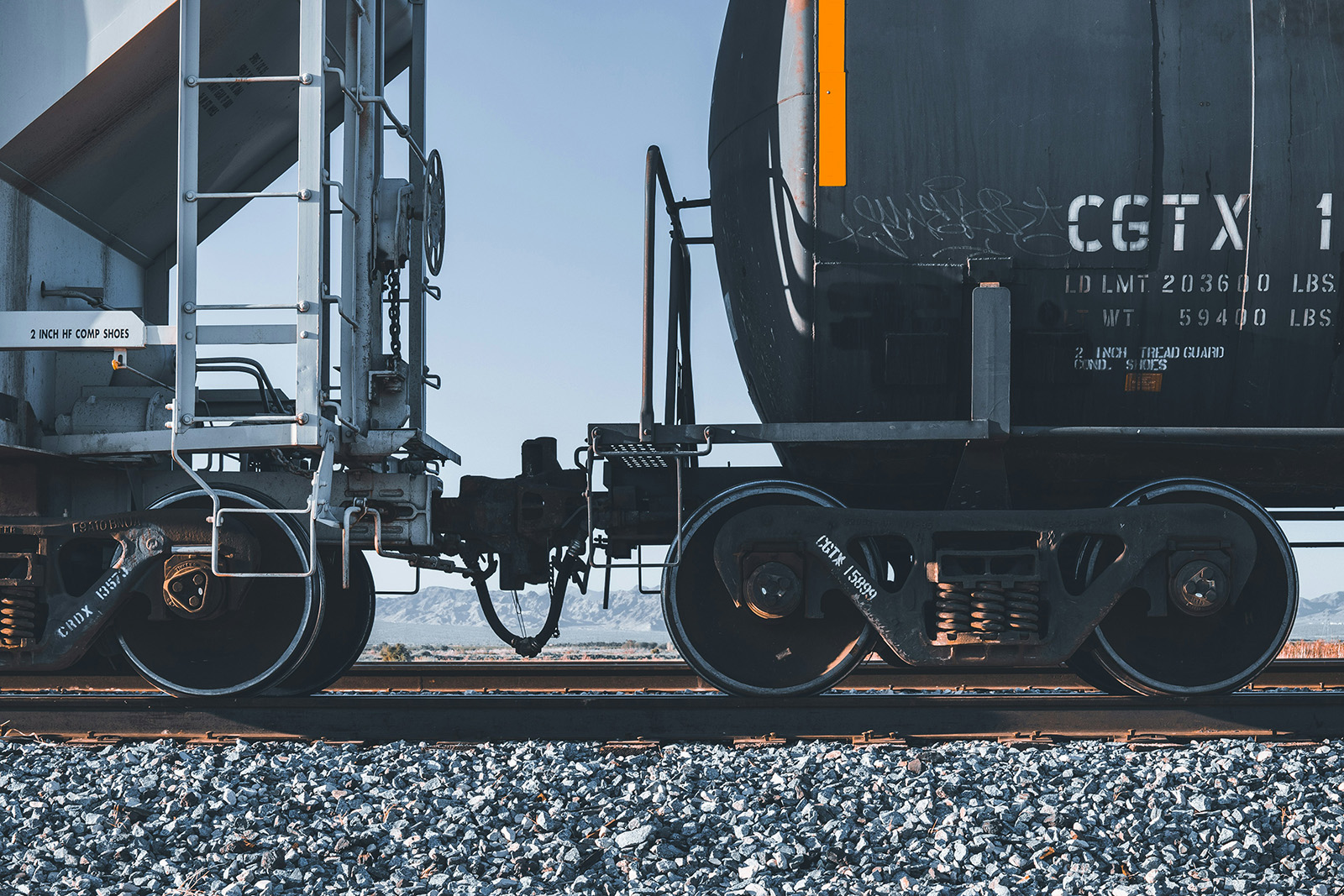
Tank cars don’t convert from one commodity to the next without preparation – or, in railroad terminology, change of service cleaning and, often hand-in-hand, service equipment replacement or re-conditioning.
These routine steps often matter as much as heavy repairs. Shippers rely on it to know their cars can be converted from one commodity to another seamlessly and with minimum delay.
Protecting flexibility and maintaining integrity
Cars in chemical service must be cleaned and neutralized before being qualified for another compatible commodity in that same group. Even cars like covered hoppers and open gondolas require cleaning with changes in load types (as in seasonal conversion from grain to fertilizer service, and vice-versa) so that leftover material doesn’t contaminate the next shipment.
Reducing health and safety risks
Railroads don’t just move goods—they carry responsibility for public safety. Leftover residues, whether flammable, toxic, or inert, create hazards. Cleaning removes that variable.
Cleaning crews drain tanks, flare residual gas, flush lines, and clean interiors so that cars can be used in different service or repaired. Hazardous-material cars get even closer attention. Specialized teams are trained to spot residues and neutralize them before the car is cleared, or, once repaired, apply neutral environments, such as nitrogen pads, necessary to make future loadings safe. Properly done, car cleaning provides a layer of risk management that no serious operator overlooks.
Supporting inspections and preventive maintenance
Cleaning doesn’t happen in isolation. When car cleaning is co-located with a repair facility, cars taken out of service for change of service cleanings can be repaired at the same time.
That flexibility gives railroads more control. Maintenance can be scheduled around out-of-service events instead of in an emergency rush. For shippers, it adds up to fewer interruptions and fewer delays, tighter scheduling, and less guesswork. Cars spend more time earning instead of sitting idle.
The environmental connection
Modern cleaning practices also intersect with environmental responsibility. Cleaning a railcar doesn’t end with the car itself. Car cleaning leaves behind wastewater and residue, which must be contained, treated, and disposed of under both state and federal rules
When the material is managed in a controlled facility, the chances of mis-handled tank or rail car waste are eliminated. For railroads and shippers, it’s not just about compliance—it’s about showing that safe operations and environmental care can go hand in hand.
Regional realities: cleaning and car repair in the Southwest
Because the Apache is one of the few full-service shops in the southwest, fleets that operate across Arizona often send cars to the Apache rather than paying freight charges on a non-revenue move hundreds of miles west into California or east into Texas.
That geography matters. It makes cleaning not just a sound logistical practice but a regional advantage.
The Apache perspective
Apache Railway in Snowflake is one of the few short lines in the region offering a complete railcar cleaning program alongside repair, storage, and transloading. That combination gives operators a one-stop option. Cars can be staged, cleaned, stored, and repaired and then put back on the BNSF mainline through Holbrook without unnecessary detours.
For industries scattered across the Southwest, that means less downtime, fewer empty miles, and more predictable schedules.