

War on Two Fronts
By the early 1940s, the United States was stretched to its limits. American factories were running day and night. Railroads carried steel, grain, oil, and soldiers to ports on both coasts. In the middle of all that urgency sat the forests of northern Arizona, where the Apache Railway became part of the hidden backbone of the war effort.
Timber Becomes a Strategic Resource
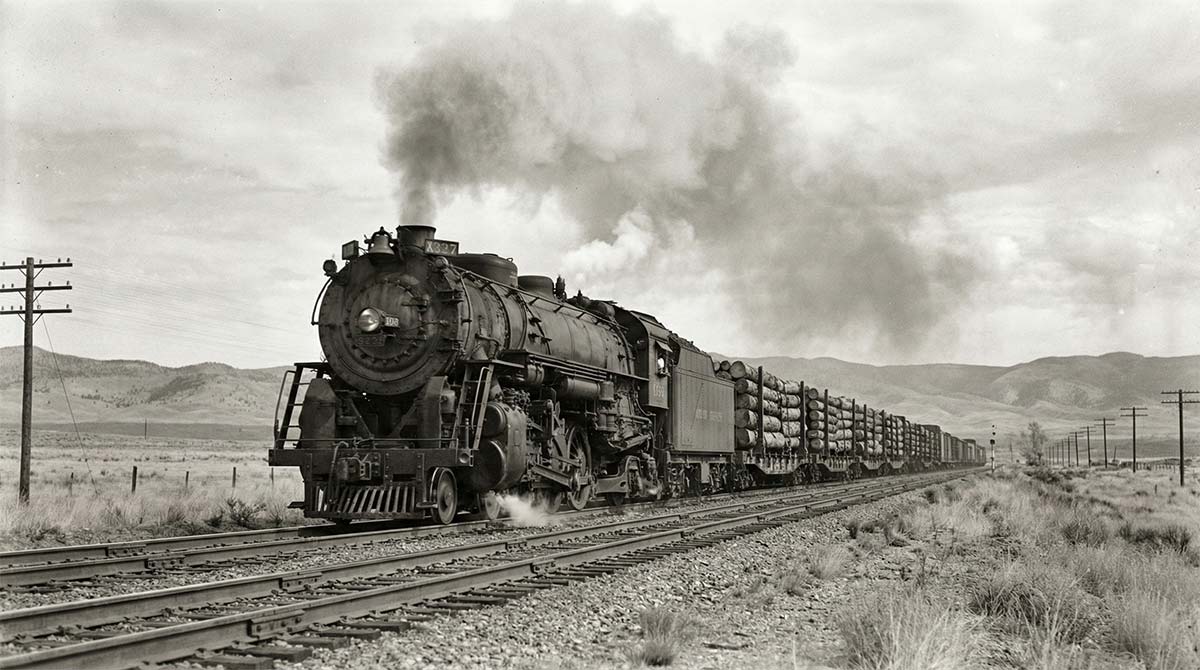
The war demanded timber in staggering quantities. Crates for munitions. Planks for ship decks. Barracks and bridges thrown up wherever soldiers needed shelter or transport. For Apache, timber was already its bread and butter. The White Mountains still held vast stands of ponderosa pine, and those trees suddenly became military assets.
Trainloads of logs left Snowflake and rolled toward mills and factories with a purpose larger than commerce. What might once have been a seasonal cut now had urgency. Each car filled with lumber represented a piece of the war machine.
Extending the Line to Maverick Camp
In 1944, Apache pushed its tracks farther south to Maverick, a logging camp deep in the timber belt. The extension wasn’t just a business decision. It was a wartime necessity—more direct access to more trees, fewer delays in getting logs to market, and quicker turnaround at the mill.
That stretch of steel meant jobs for track crews and loggers, but it also meant more raw material feeding into a national supply chain under enormous strain. For a short line in rural Arizona, the Maverick extension placed Apache firmly in the story of the war.
The Human Side of the War Effort
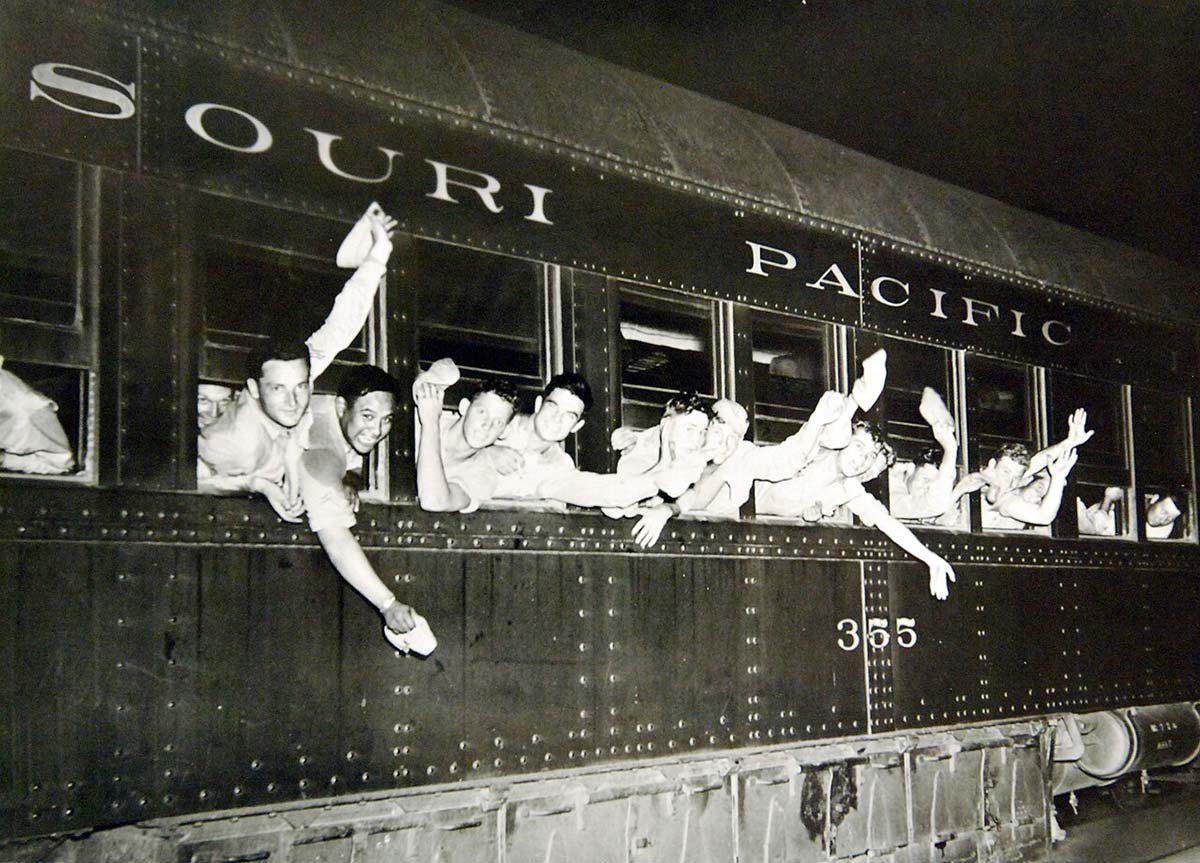
Every mixed-train departure left its mark. A neighbor’s son would vanish from the mill to wear an Army jacket. A brakeman would be gone the next week, bound for training in another state. Those who stayed behind worked with smaller crews, stretching themselves thin to keep trains and timber moving.
Life in Snowflake and Holbrook carried reminders of the conflict even though the battlefields were far away. Gasoline and sugar were rationed. Blackout drills meant houses went dark, curtains pulled shut until the all-clear. The hours dragged, especially when rationing and headlines kept piling on. Through it all, the sound of trains didn’t stop. That steady rumble gave people something to hold onto — a reminder that their work, however small, connected to the wider fight.
A Short Line with National Reach
Apache never pretended to be a giant. Its stretch of track was short, a sliver against the web of lines that crisscrossed the country. Yet when the war years came, even that small railroad carried its weight. Timber cut in the White Mountains rolled down to Holbrook, and from there it could hitch onto the Santa Fe and travel wherever the war effort demanded.
For a railroad built to haul logs to nearby mills, the war shifted its place in the world. What once seemed like a local spur suddenly became a link in the chain of the national supply effort.
War’s End and Lasting Impact
By the end of 1945, the fighting had stopped, and the country began to reset. Timber demand eased, but the experience of those war years left its mark on both the crews and the towns they served. Men who had spent the war years working long shifts under pressure carried that discipline forward, and families who kept the trains moving remembered what it meant to pull together when the stakes were high.
For the communities tied to Apache, the railroad came to symbolize more than commerce. It was proof that even a short line could matter when the nation was in need, and that memory stayed with people long after peace returned.
Why This Story Still Matters
World War II showed how even the smallest railroads had a role to play when the stakes were highest. For Apache, it was about proving that a short line in the Arizona high desert could keep pace with the country’s most urgent demands.
Today, when the conversation turns to resilience and regional infrastructure, Apache’s wartime history still resonates. The lesson is simple but powerful: no railroad is too small to matter when the nation needs every resource it can gather.