

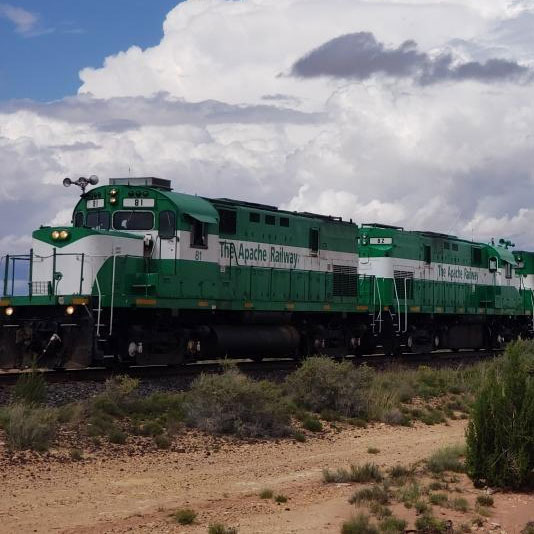

Foundation and Early Growth (1917–1920)
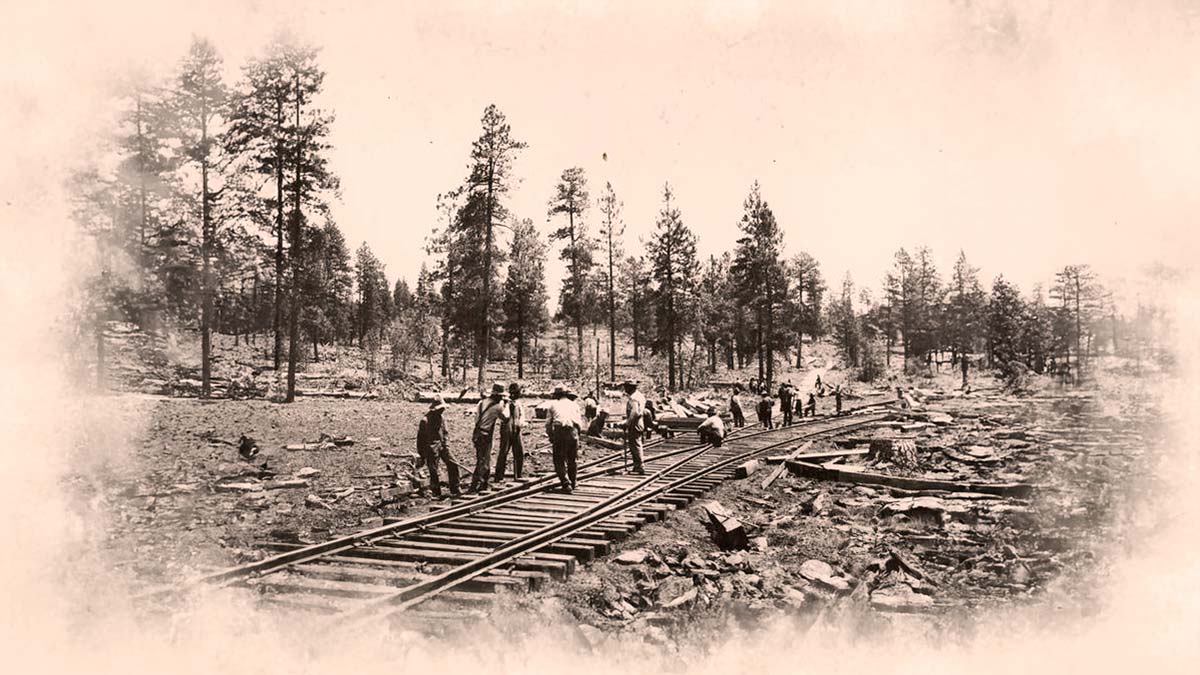
- Sept 5, 1917 – Incorporated under Arizona law to build from Holbrook to timber reserves on the Fort Apache Indian Reservation and in the Apache-Sitgreaves National Forest.
- 1918 – First 38 miles completed from Holbrook to Snowflake.
- 1920 – Extended to McNary; full 72-mile line.
Depression Challenges (1920s–1930s)
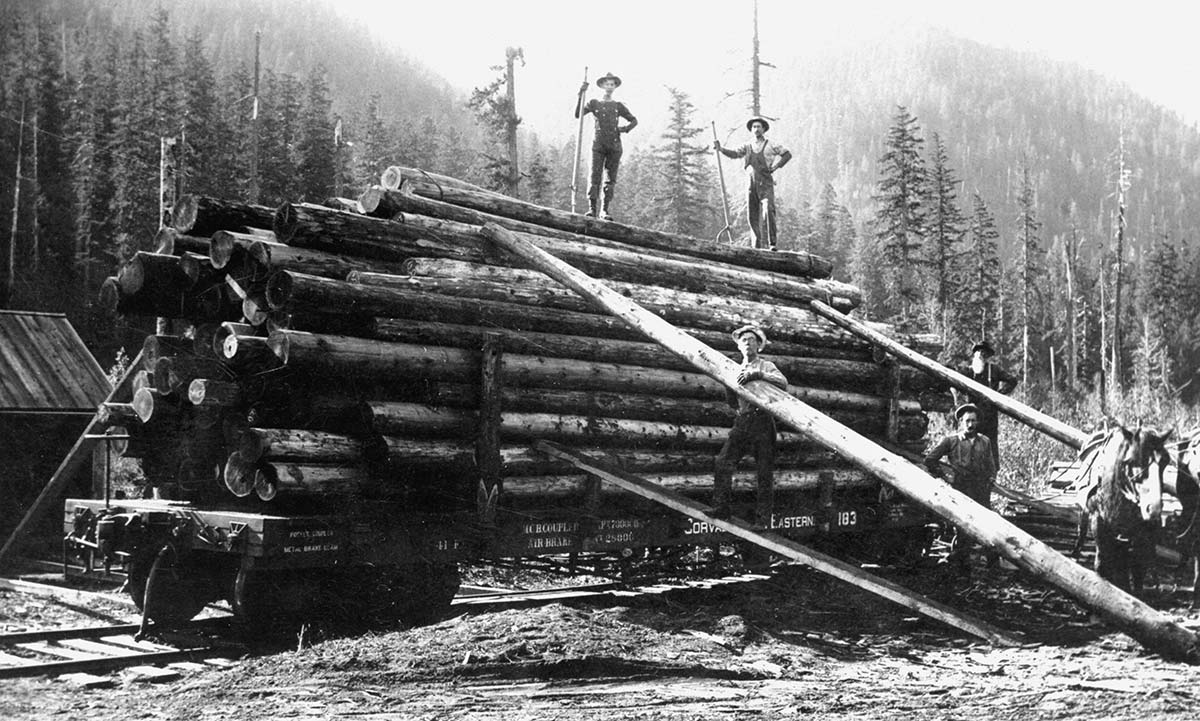
Photo by The Oregon State University Collections and Archives
- 1924: Cady Lumber, a Louisiana timber company, acquires Apache Lumber, including timber leases on the Fort Apache Reservation and the railway.
- 1931–1936: Operated under receivership during the Great Depression; emerged intact.
Wartime Service & Passenger Operations (1940s–1950s)
- 1940s: Carried timber and lumber for WWII construction and munitions crates.
- 1944: Tracks extended to Maverick logging camp.
- Passenger service continued into the 1950s, with mixed trains until 1954.
Paper Mill Era & Tourism (1960s–1970s)
- 1960: Paper mill opens near Snowflake, becomes primary traffic base.
- 1964–1976: White Mountain Scenic Railroad offers steam excursions from McNary to Maverick.
- 1976: Tourist operation ceases; equipment moved to Utah.
Contraction & Retrenchment (1980s)
- 1982: McNary sawmill closes; 37 miles of track abandoned.
- Apache becomes Arizona’s last logging railroad.
- Mainline reduced to current 36 miles from Holbrook to Snowflake.
Ownership Changes (1990s–2000s)
- 1998: Stone Container sells papermill and railway to Abitibi-Consolidated.
- 2008: Catalyst Paper acquires papermill and railway.
Crisis and Rescue (2010s)
- Sept 2012: Catalyst Paper files for bankruptcy, Snowflake mill announces its closure; the Apache’s workforce falls to 8.
- 2012–2015: Community leaders form Snowflake Community Foundation to operate the Apache with the purpose of saving the line.
- Nov 2015: Apache purchased by Aztec Land and Cattle Co., Ltd., the area's largest landowner and an integral part of the community since 1884, and MPS Eggs, a large mid-western egg producer.
Modern Revival (2015–Present)
- 2015: Workforce expands to 21 employees.
- 2018: Facility adapted for tank car repair; earns AAR M-1002 & M-1003 certifications.
- 2024: Donates ALCO RS-36 #800 to Navajo County Historical Society.
- 2024: Continues operations with vintage ALCO C420s and C424s.
